Xander Schröder · 7 September 2026
Decoding Collaborative Tagging Systems and Their Effects on Long-Term Information Retrieval Accuracy in Shared Digital Workspaces
Collaborative tagging systems enable multiple users within shared digital workspaces to assign keywords and labels to resources such as documents, datasets, and project files, which generates dynamic categorization structures that reflect collective input rather than fixed hierarchies. These systems appear in platforms that support group editing and resource management, where participants contribute tags based on their individual perspectives and project needs. Researchers have documented how this approach creates folksonomies that adapt over time yet introduce variability in term usage across different teams and time periods.
Core Mechanisms of Tag Generation and Application
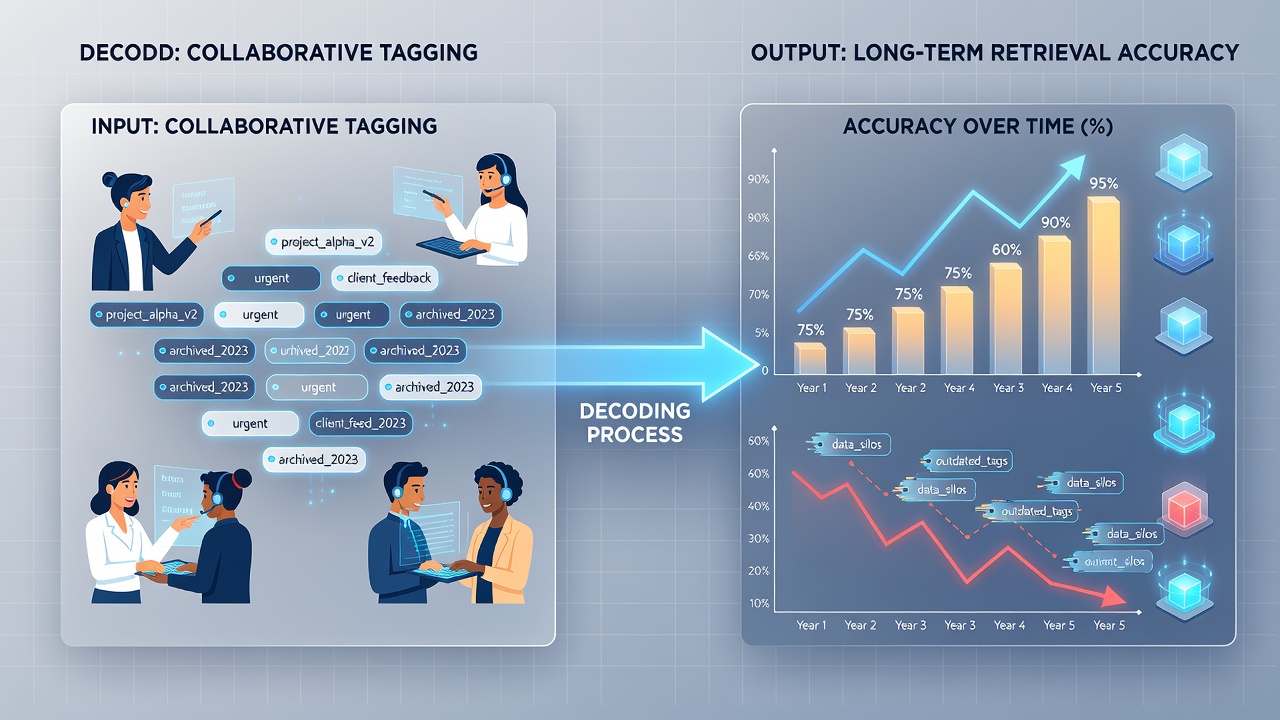
Users in collaborative environments add tags through simple input fields that attach metadata directly to files or entries, which allows subsequent searches to surface materials via matching keywords instead of relying solely on folder structures or formal metadata schemas. Studies from academic institutions show that tag vocabularies expand rapidly in active workspaces because contributors draw from personal terminology, domain-specific jargon, and evolving project language. Data collected through September 2026 indicates that workspaces with more than fifty regular contributors experience tag proliferation rates exceeding twenty percent per quarter, which creates both richer retrieval options and increased potential for synonym overlap.
Tag application occurs without centralized approval in most systems, so individual interpretations determine label assignment while automated suggestions based on prior usage influence consistency. Observers note that initial tagging sessions produce high agreement on core terms, whereas later additions introduce divergent labels when new team members join or project scopes shift. This pattern holds across enterprise wikis, research repositories, and cross-functional project platforms where retrieval queries depend on matching user-entered search terms against the accumulated tag set.
Impacts on Retrieval Performance Over Extended Periods
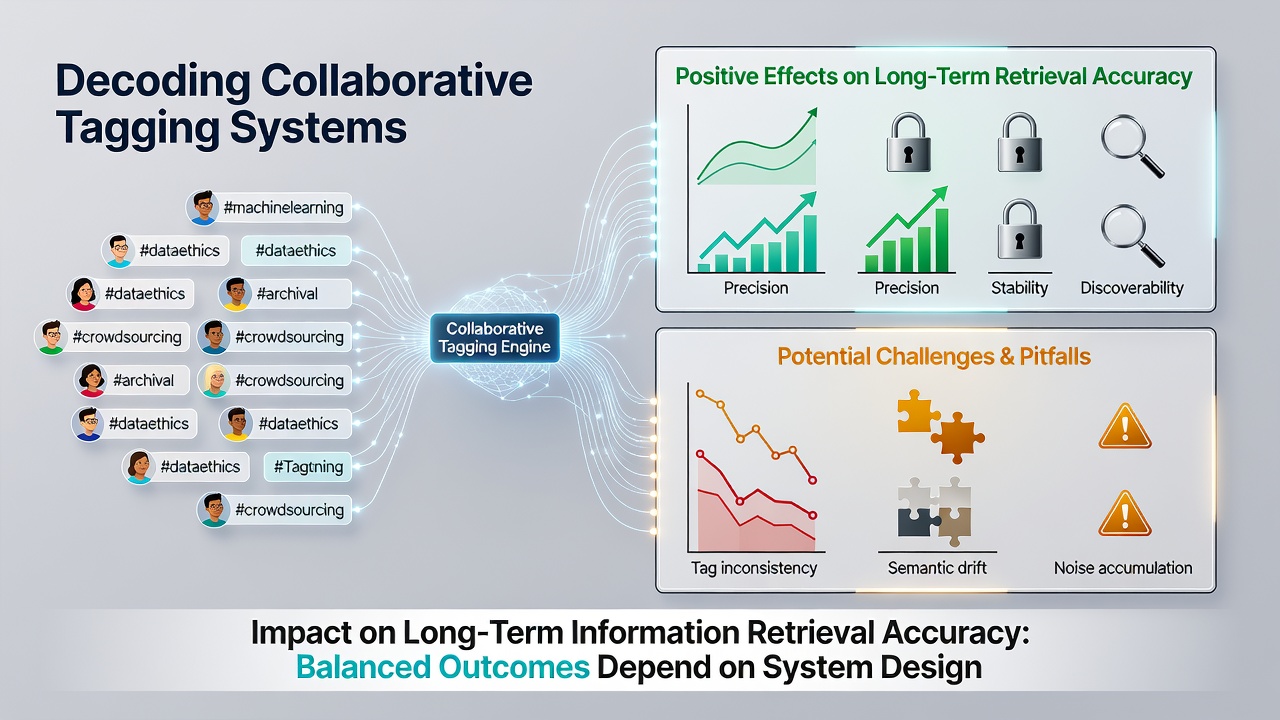
Long-term retrieval accuracy in these environments depends on how well accumulated tags continue to align with the conceptual content of resources as organizational language and participant groups change. Evidence from longitudinal analyses reveals that precision rates for tag-based searches decline after twelve to eighteen months when synonym clusters grow without consolidation mechanisms. Systems that retain all historical tags without pruning show recall improvements of up to fifteen percent in the first year, followed by gradual drops as ambiguous or outdated terms dilute result relevance.
Shared workspaces that integrate tagging with version histories demonstrate more stable performance because tags can link to specific document iterations rather than broad resource categories. Research indicates that organizations tracking tag evolution through September 2026 recorded average accuracy retention above seventy-two percent when automated clustering tools grouped related terms, compared with fifty-eight percent in environments lacking such support. Retrieval queries that combine tags with full-text indexing maintain higher consistency because the combined approach compensates for gaps in either method alone.
Factors That Shape Accuracy Trajectories
Team turnover rates influence tag stability because departing contributors leave behind labels that new members may not interpret the same way, which leads to query mismatches over successive project cycles. Data from multi-year deployments show that workspaces experiencing thirty percent annual staff rotation accumulate divergent tag meanings at twice the rate of stable teams. Training protocols that document tag conventions at onboarding reduce this divergence, yet the effect diminishes unless documentation updates occur alongside vocabulary shifts.
Domain complexity also plays a role, since technical fields generate specialized terminology that benefits from tagging yet suffers when cross-team collaboration introduces layperson approximations. Analyses of research collaboration platforms indicate that interdisciplinary groups achieve lower long-term precision unless they implement periodic tag audits that merge equivalent terms. External regulatory frameworks, such as those outlined in the European Union data governance guidelines, encourage metadata practices that support accurate retrieval while requiring organizations to maintain traceability of shared resources.
Observed Patterns Across Different Workspace Types
Academic research repositories that rely on collaborative tagging report sustained retrieval improvements when contributors include both domain experts and information specialists who normalize emerging terms. In contrast, corporate project spaces handling rapidly changing product specifications show faster tag obsolescence because business priorities shift labels before prior terms stabilize. A study released by the National Institute of Standards and Technology examined retrieval logs from government digital workspaces and found that tag-based systems retained usefulness longer when integrated with controlled vocabularies that limited free-form additions.
Usage logs from platforms supporting both tagging and structured folders reveal that hybrid approaches yield the most consistent accuracy across multi-year horizons, because users retain fallback navigation paths when tag matches weaken. Patterns observed through 2026 confirm that retrieval sessions combining tags with filters on creation date or contributor identity reduce noise from legacy labels that no longer match current resource states.
Conclusion
Collaborative tagging systems continue to shape information retrieval in shared digital workspaces by balancing flexible user input against the challenges of maintaining term consistency across time and personnel changes. Available evidence demonstrates measurable effects on accuracy that vary according to team stability, domain characteristics, and supplementary tools for tag management. Organizations tracking these variables through structured observation gain clearer insight into how tagging practices interact with long-term search performance in evolving collaborative settings.