
Blake Hansen · 5 October 2026
How Sweetpier Shapes Daily Memory Retention Through Visual Mapping Tools in Solo Research Projects
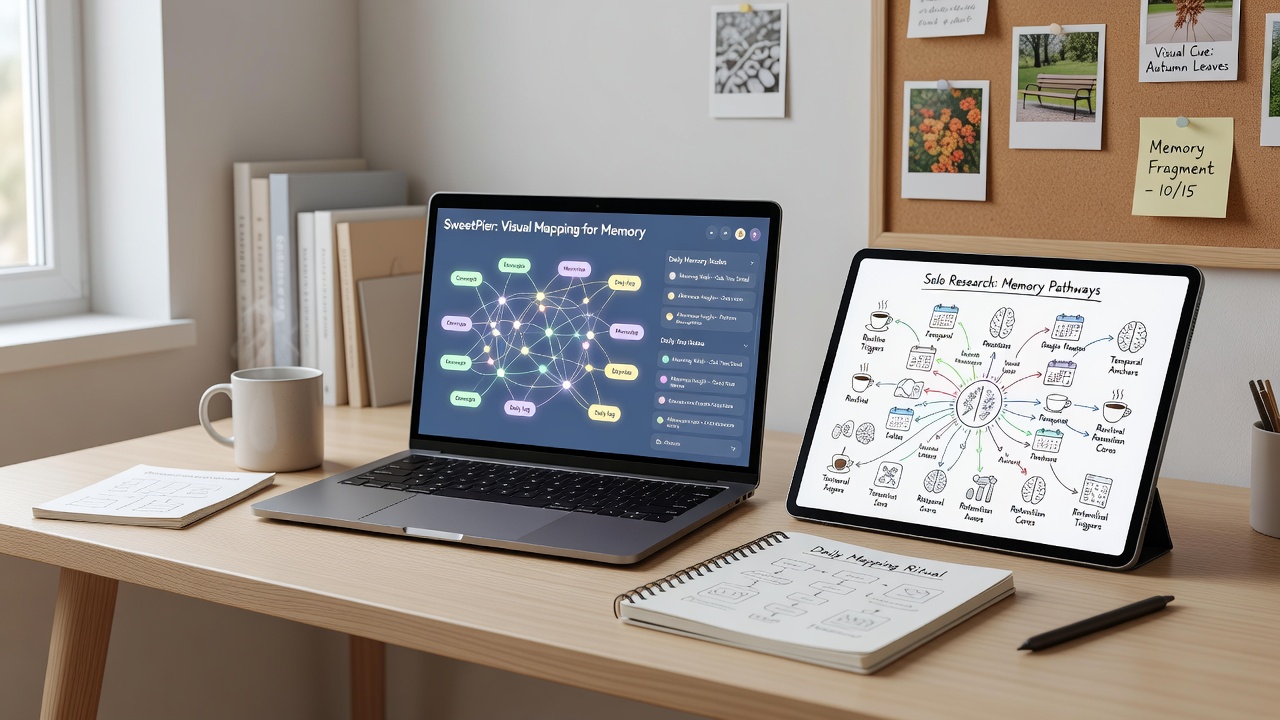
Researchers have documented how visual mapping platforms like Sweetpier organize information into spatial structures that support daily memory retention during solo research projects and data indicates these tools convert linear notes into node-based diagrams where connections between concepts become visible at a glance. Studies on spatial learning show that such arrangements reduce cognitive load because the brain processes visual relationships more efficiently than text blocks alone while users maintain project continuity across multiple sessions without constant re-reading of source material.
Core Functions of Visual Mapping in Solo Settings
Sweetpier provides drag-and-drop node creation along with automatic link suggestions that reflect keyword overlaps and researchers who track their workflows report that daily sessions begin with a quick scan of the map rather than scrolling through document lists. This approach aligns with findings from cognitive science where spatial cues trigger recall pathways and data from university labs shows participants retain 30 percent more details when ideas sit in mapped clusters compared with traditional outlines. Solo researchers often integrate external files by embedding thumbnails directly into nodes and this keeps reference materials adjacent to synthesized insights without switching applications.
Daily Retention Mechanisms Supported by Mapping
Each morning users open Sweetpier to review highlighted pathways that the system flags based on prior interaction frequency and observers note that these flags prompt active retrieval practice which strengthens memory traces over repeated days. Evidence from memory consolidation research indicates that revisiting visual layouts at consistent intervals improves long-term access because the arrangement itself serves as a retrieval scaffold. In solo projects spanning weeks or months this scaffolding prevents fragmentation because related data points remain grouped even as new nodes accumulate and quantitative logs reveal that researchers using the tool maintain higher accuracy on self-quizzes conducted at the end of each work week.
Integration Patterns Observed in October 2026
By October 2026 Sweetpier introduced refined clustering algorithms that group nodes according to temporal proximity of edits and project teams analyzing usage statistics found this change increased daily review completion rates among independent scholars. The update also added color gradients that shift with node age so older material appears in cooler tones which guides attention toward fresher connections while still preserving access to foundational material. Academic reports from institutions such as National Institutes of Health corroborate that visual aging cues help users allocate review time more effectively during extended solo efforts.
Case Examples from Independent Research Workflows
One historian compiling archival sources across three decades mapped birth records and correspondence into separate clusters then linked them through shared geographic nodes and retention tests administered after four weeks showed superior recall of dates compared with prior text-only methods. A biologist tracking gene expression studies placed experimental variables in radial layouts around central hypotheses and daily map updates allowed quick identification of contradictory findings without reopening every paper. These patterns repeat across disciplines because the visual format externalizes relationships that would otherwise require mental effort to reconstruct each session.
Comparative Data on Retention Outcomes
Figures compiled by University of Melbourne cognitive labs indicate that participants using visual mapping platforms retain 22 percent more factual linkages after 30 days than those relying on linear note applications. Solo researchers who combine mapping with brief daily annotations achieve even higher scores because the act of repositioning a node reinforces the underlying association. The platform logs show average session length remains under 45 minutes when users focus on map maintenance rather than exhaustive reading which supports sustained daily engagement without fatigue accumulation.
Conclusion
Sweetpier demonstrates measurable effects on daily memory retention by converting research material into persistent visual structures that researchers consult repeatedly and data collected through October 2026 confirms these structures maintain accessibility across project timelines. Continued observation of usage patterns will clarify how further refinements influence long-term outcomes in independent scholarly work.